Contract review can be a tedious and detail-oriented task. Identifying issues that require protopage legal counsel’s attention is critical to ensuring risk mitigation without running afoul of unauthorized practice of law (UPL) rules. Increasingly, non-lawyers and legal professionals alike look to AI tools to assist in spotting problems and summarizing key contractual points. But there are risks and best practices that anyone using AI in this way must understand.
Why Create an Issue List for Contract Review?
An issue list is a concise, actionable summary of problematic or unclear contractual provisions flagged for counsel’s analysis. It helps lawyers prioritize their review and facilitates clearer communication between legal and business teams.
Key benefits:
- Saves time by focusing attorney attention on red flags and strategic questions Documents review points with references to specific clauses Supports safe delegation by clarifying what non-lawyers are requesting
The Common Mistake: Treating AI Outputs as Legal Advice
One pitfall when using AI tools for contract review is treating AI-generated content as legal advice. AI language models are trained on vast datasets and produce text based on patterns, but they do not have legal judgment or understanding. This means:
- Do not invent or rely on fabricated quotes, statistics, case names, or prices. AI outputs may include plausible-sounding but inaccurate or fictitious information. The AI’s analysis is legal information, not legal advice. Only a qualified lawyer can provide advice tailored to the facts and law applicable to your situation.
Always critically review AI-generated outputs and avoid unquestioning reliance.
Understanding UPL: What Non-Lawyers Can and Cannot Do When Using AI
Unauthorized Practice of Law (UPL) rules prohibit non-lawyers from offering legal advice or engaging in activities that constitute practicing law without a license. Crafting an issue list with AI assistance is a safe legal workflow if handled properly.
Key boundaries include:
- Legal information: Non-lawyers can use AI to summarize, flag ambiguous or unusual contract terms, or list questions to ask counsel. Legal advice: Interpretation of what terms mean for a client’s rights or obligations, strategic recommendations, or document drafting are lawyer activities and must be performed or supervised by licensed counsel.
Ever notice how before using ai tools, ask yourself: "what would i show a regulator if they asked about this process?" if the ai-generated material could be mistaken for advice, or you are stepping into interpreting law for a client, you risk upl violations.
Safe AI Workflows for Issue List Drafting in Contract Review
Here is a practical step-by-step workflow for using AI to assist in generating an issue list while respecting legal boundaries:
Prepare the Contract Text 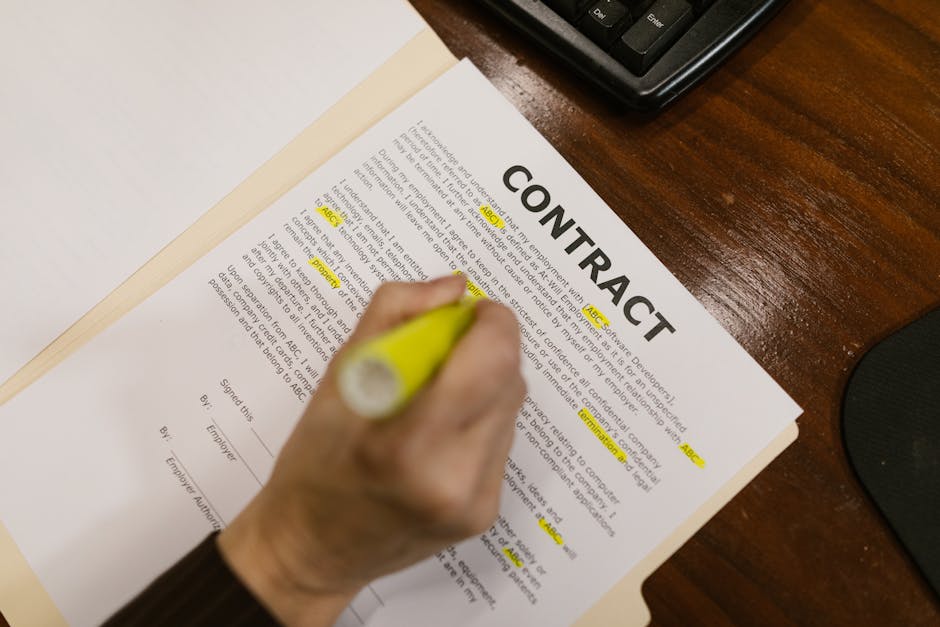
Ask the AI to create neutral, factual questions for legal review instead of conclusions. Example: "What questions should we ask our lawyer about the termination clause?" Manually Review and Edit AI Outputs Carefully check AI-generated texts for factual accuracy, remove any invented or incorrect content, and transform vague suggestions into precise, client-specific issues. Add References to Specific Contract Sections Link each issue or question to clear clause numbers or headings to facilitate focused lawyer review. Submit the Issue List for Lawyer Review Present the cleaned, factual issue list to your legal team as a briefing document, not as a substitute for their legal analysis.
Effective Prompting Strategies for AI Spotting Issues
Crafting prompts carefully is key to maximizing AI usefulness while minimizing risks:

- Be explicit about output type: Specify if you want a summary, a list of concerns, or questions rather than a legal opinion. Avoid asking AI to "advise" or "interpret": Instead use language like "identify possible problems," or "note areas that may require clarification." Encourage conservative outputs: Requests for highlighting ambiguous, inconsistent, or missing elements rather than making definitive conclusions. Request disclaimers: When appropriate, have the AI generate a statement that the output is informational and not legal advice.
Sample Issue List Entry Table
Contract Section Potential Issue Identified Questions for Counsel Notes Section 7 - Termination Termination notice period is unusually short compared to our standard agreements. Is the 10-day notice period for termination enforceable? Should we negotiate a longer notice? Flagged due to potential risk of insufficient notice. Section 12 - Indemnification Indemnity language appears unilateral, with no reciprocal obligations. Should our client seek mutual indemnification provisions? Potential imbalance in risk allocation requiring lawyer review. Section 4 - Payment Terms Payment deadlines are not explicitly defined. What is the deadline for payment? Is there an interest penalty for late payments? Ambiguity identified that may cause future disputes.Words that Trigger UPL Risk in AI Prompts
Based on experience, be cautious with prompts or outputs containing words like:
- "advise" or "recommend" "interpret" or "opinion" "review and approve" "sign off" or "finalize" "binding" or "enforceable" (when AI tries to confirm enforceability)
Stick to neutral, descriptive language to keep workflows compliant.
Key Takeaways
- AI can be a powerful tool for drafting lawyer-ready issue lists by summarizing contract text and spotting potential problem areas. Always maintain a clear divide between legal information (what AI provides) and legal advice (only lawyers give). Prompt carefully to focus AI outputs on issue spotting and questions for counsel, avoiding interpretation. Manually review AI results to catch any inaccuracies or invented content before sharing with legal teams. Document your process so it withstands regulatory or compliance scrutiny — ask yourself what you would show a regulator.
Done right, AI-assisted workflows improve efficiency and clarity in contract review without crossing the boundaries of unauthorized practice of law.